Top 5 Camera Innovations in Cinematography for 2025
Deep Dive: The Future of Cinematography Technology in 2025
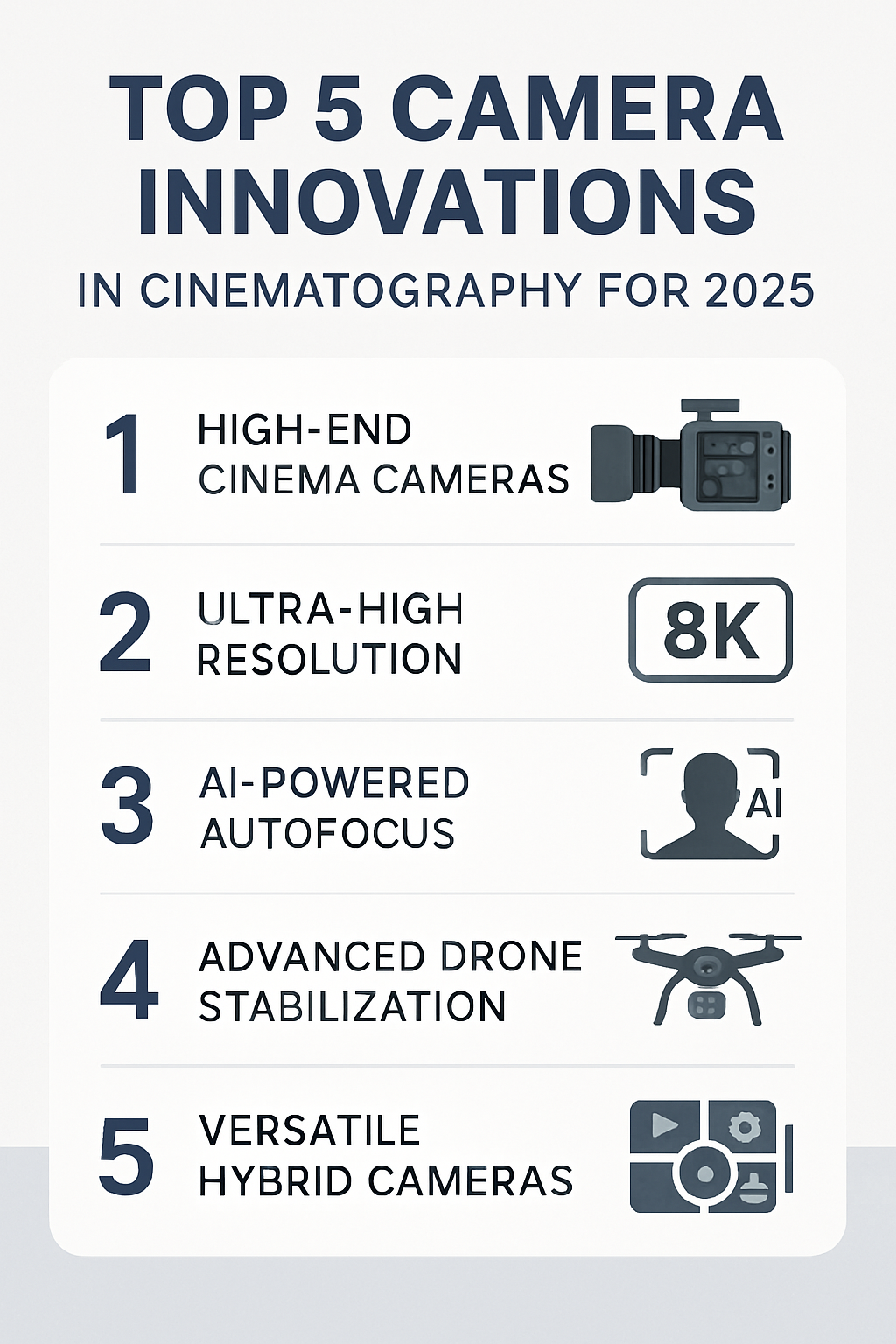
As we move through 2025, the world of cinematography is experiencing a seismic shift, driven by powerful technological advancements. This growth is fueled by innovations that are not just improving image quality but are fundamentally changing filmmaking workflows. Here’s a detailed look at the key trends shaping the industry.
1. The Push Beyond 8K: Ultra-High Resolution and Sensor Technology
The industry's thirst for detail is driving camera resolutions far beyond the 8K standard. High-end cameras like the Blackmagic URSA Mini Pro 12K now offer staggering resolutions that provide immense flexibility in post-production, allowing for reframing, stabilization, and pristine output for large-format screens. The ARRI ALEXA 35, with its 4.6K sensor, emphasizes dynamic range and color science over sheer resolution, providing film-like highlight handling and richer colors.
2. Artificial Intelligence: From Smart Assistant to Creative Partner
Artificial Intelligence (AI) is transforming filmmaking from a tool into a creative collaborator. AI-powered autofocus, a feature now standard in many cameras, uses deep learning to recognize and track subjects with incredible precision. High-end cameras from manufacturers like Canon and Sony showcase systems that can detect human eyes, heads, and bodies, as well as animals and vehicles, maintaining sharp focus even with erratic movement.
3. Next-Gen Stabilization and Aerial Cinematography
Drones and advanced stabilization systems have democratized complex camera movements. In 2025, professional cinematography drones like the DJI Inspire 3, with its 8K full-frame camera, allow for intricate aerial shots that were once reserved for massive budgets. These tools provide unique, immersive perspectives that draw audiences deeper into the story.
4. The Rise of Modular and Accessible Systems
The line between different camera types is blurring. Versatile hybrid mirrorless cameras from brands like Sony, Canon, and Panasonic offer professional cinema features in compact bodies. The Panasonic Lumix S5 II, for example, is lauded for its 6K video capabilities and advanced autofocus in a cost-effective package. Furthermore, modular "box" style cameras are gaining popularity for their flexibility, allowing them to be rigged for any situation.
5. Enhanced Connectivity and Workflow Integration
The demand for efficient workflows is driving innovations in connectivity. Camera systems are being designed for better integration with cloud-based platforms and real-time editing software. High-end cameras like the Sony VENICE 2 are favored in major productions for their robust workflows, internal recording options, and dual base ISO for clean images in any light. This streamlines the entire production pipeline, from capture to final delivery.


Comments
Post a Comment