Beyond the Body: Essential Camera Gear for Every Filmmaker in 2025
Beyond the Body: Essential Camera Gear for Every Filmmaker in 2025
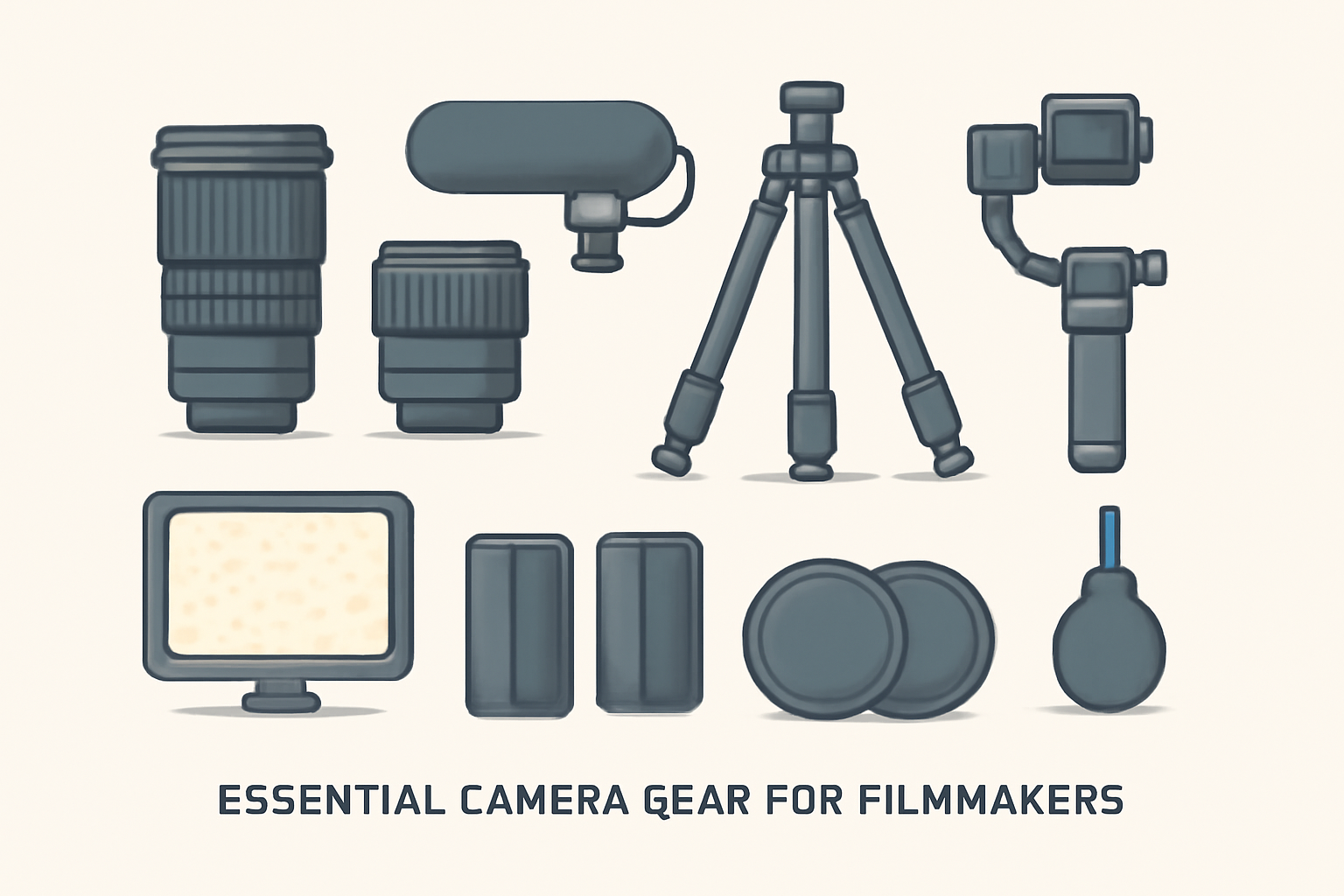
While the camera is the heart of your filmmaking setup, the gear you build around it is what brings your creative vision to life. The right accessories can elevate your production value, streamline your workflow, and unlock new creative possibilities. Here’s a guide to the essential camera gear every filmmaker should consider in 2025.
1. Lenses: The Key to Your Visual Style
Lenses are arguably the most critical investment after the camera itself. They define the look and feel of your footage.
- Prime Lenses: These have a fixed focal length (e.g., 50mm) and typically offer a wider maximum aperture (like f/1.8). This makes them excellent for achieving a shallow depth of field (blurry background) and performing well in low-light conditions.
- Zoom Lenses: A versatile zoom lens, such as a 24-70mm f/2.8, can cover a wide range of shots without needing to swap lenses, making it ideal for run-and-gun situations, documentaries, and event coverage.
- Anamorphic Lenses: For those seeking a truly cinematic look, anamorphic lenses create a wider aspect ratio, distinct lens flares, and a unique bokeh that is characteristic of many blockbuster films.
2. Audio Equipment: Great Sound is Half the Battle
Poor audio quality can ruin an otherwise beautiful shot. Investing in good audio gear is non-negotiable.
- On-Camera Shotgun Mic: This is the most basic and essential audio tool. It mounts directly to your camera and is great for capturing clear directional audio, significantly improving on the camera's internal microphone.
- Lavalier Mics (Lavs): These small, clip-on mics are perfect for interviews and dialogue scenes, as they capture clear audio directly from the speaker and minimize background noise. Wireless lav systems offer more freedom of movement.
- External Recorder: For the highest quality audio, a dedicated external recorder like a Zoom H4n Pro or a Tascam DR-40X allows you to capture audio from multiple sources independently of the camera.
3. Stabilization: Smooth and Steady Shots
Shaky footage can look unprofessional. Proper stabilization is key to achieving smooth, cinematic movement.
- Tripod: A sturdy tripod is the most fundamental piece of stabilization gear. Look for one with a fluid head, which allows for smooth pans and tilts.
- Gimbal: For dynamic, moving shots, a 3-axis gimbal is essential. Gimbals like the DJI RS 3 Pro use motors to keep the camera steady, allowing you to walk, run, or even follow a subject while maintaining incredibly smooth footage.
- L-Plate: A simple but effective accessory, an L-plate allows you to quickly switch your camera from horizontal to vertical orientation on a tripod without having to re-level your shot.
4. Lighting: Shaping Your Scene
Lighting is what shapes the mood and quality of your image. Even a basic lighting kit can dramatically improve your visuals.
- LED Panels: Modern LED lights are versatile, portable, and often bi-color, meaning you can adjust the color temperature from warm to cool. Many are also battery-powered, making them perfect for on-location shoots.
- Softbox: A softbox is a modifier that diffuses your light source, creating a soft, flattering light that is great for interviews and general-purpose filming.
- Reflectors: A simple 5-in-1 reflector is an inexpensive and powerful tool. It can be used to bounce existing light back onto your subject to fill in shadows or to block unwanted light.
5. Essential Accessories: The Small Things That Matter
These are the smaller items that keep your production running smoothly.
- Extra Batteries and Memory Cards: There is nothing worse than running out of power or storage in the middle of a shoot. Always have more than you think you'll need. High-speed CFexpress cards are becoming standard for high-resolution recording.
- Variable ND (VND) Filters: A VND filter acts like sunglasses for your lens, allowing you to control the amount of light entering the camera. This is crucial for shooting with a wide aperture in bright daylight to maintain a shallow depth of field and proper motion blur.
- Camera and Lens Cleaning Kit: Dust and smudges can ruin a shot. A kit with a rocket blower, microfiber cloths, and lens solution is a must-have for keeping your gear in top condition.


Comments
Post a Comment