The Language of Motion: A Guide to Cinematic Camera Movements
The Director's Eye: A Deep Dive into Cinematic Camera Movement
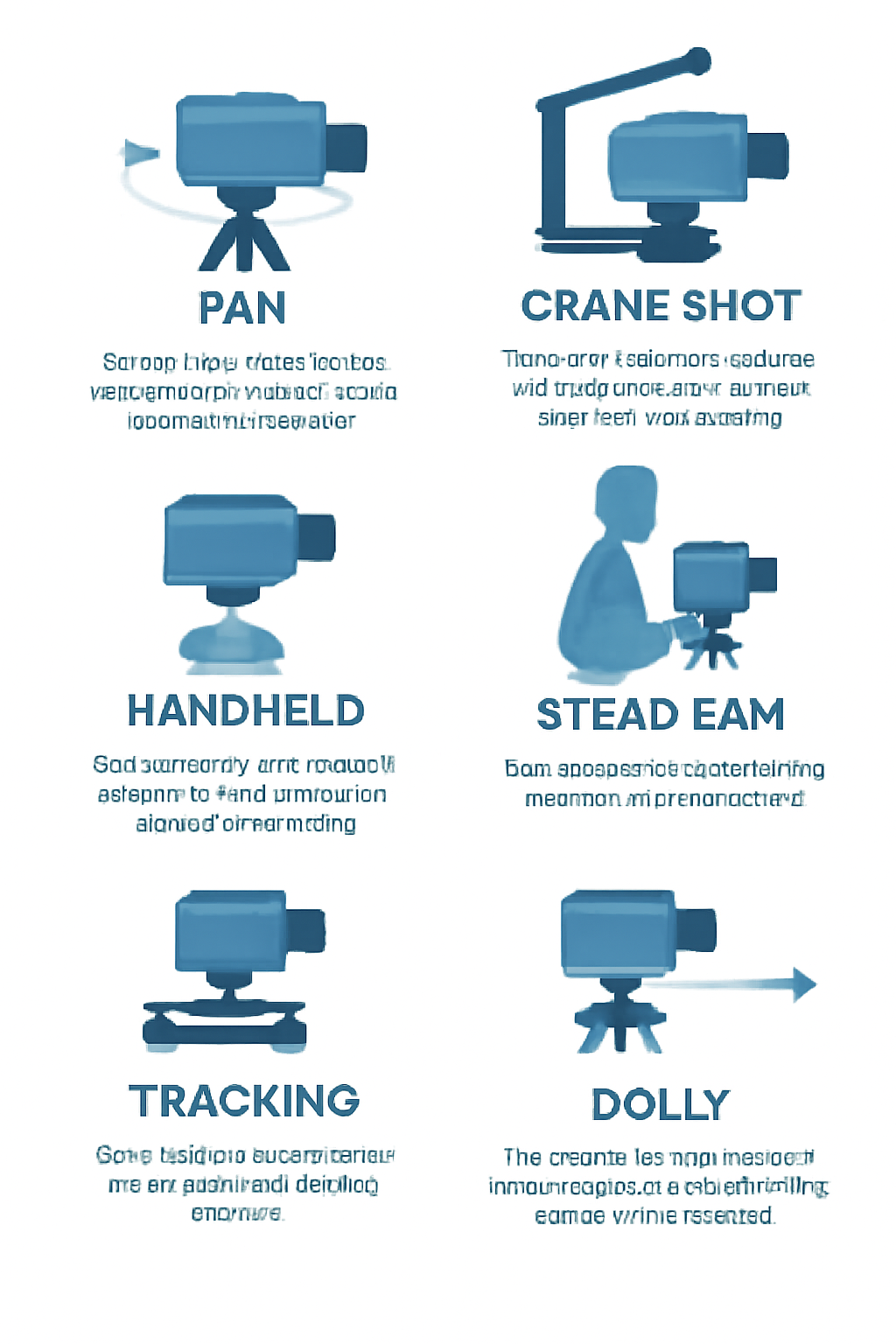
Camera movement is the invisible hand that guides your audience through a story. It’s not just about adding visual flair; it’s about making conscious choices that serve the narrative, create emotion, and control the rhythm of a scene. Moving beyond the basics, this guide explores advanced techniques and the storytelling purpose behind them.
The "Why" Before the "How": Movement with Intent
Every camera movement should have a purpose. Before you decide to pan, dolly, or tilt, ask yourself: Why am I moving the camera? Are you revealing new information? Following a character's perspective? Creating a feeling of unease or excitement? The answer will determine which movement is right for the moment.
Core Camera Movements and Their Storytelling Power
- Pan & Tilt: The simplest movements, often used to mimic a natural turn of the head. A slow pan can build anticipation as it reveals a scene, while a whip pan can create a sense of frantic energy or bridge two different locations. A slow tilt up can make a character seem powerful, while a tilt down can make them appear vulnerable.
- Dolly & Tracking Shots: These movements physically move the camera through space, creating a strong sense of immersion. A dolly-in (moving toward the subject) can intensify emotion and focus attention on a character's reaction. A tracking shot that follows a character connects the audience to their journey, making them feel like a direct participant.
- Crane & Pedestal Shots: These vertical movements are all about changing perspective and scale. A crane shot that soars high above the action can establish the grand scale of a location or signify a story's conclusion. A pedestal up can reveal an obstacle in a character's path that wasn't visible before.
Advanced Techniques for a Cinematic Edge
Once you've mastered the basics, you can combine them or use specialized gear for more expressive results.
- The Dolly Zoom (Vertigo Effect): This iconic shot, popularized by Alfred Hitchcock, involves dollying the camera in while zooming the lens out (or vice-versa). The effect is a disorienting warp in perspective, perfectly capturing a character's internal turmoil, shock, or a sudden, paradigm-shifting realization.
- Handheld vs. Steadicam: The choice between these two creates vastly different emotional tones. Handheld shooting injects a raw, documentary-style energy into a scene, conveying chaos, urgency, or intimacy. In contrast, a Steadicam or gimbal provides an unnaturally smooth, floating movement that can feel dreamlike, observational, or suspenseful as it glides through a scene.
- The Arc Shot: By circling the camera around a subject, you add dynamism and can reveal different angles of their face or environment. This is often used during a key moment to make it feel more significant and to trap the subject within the frame, focusing all attention on them.
Mastering camera movement is a lifelong journey. Start by practicing these techniques, but always remember to let the story be your guide. When movement and narrative work in harmony, you create a truly cinematic and unforgettable experience for your audience.


Comments
Post a Comment